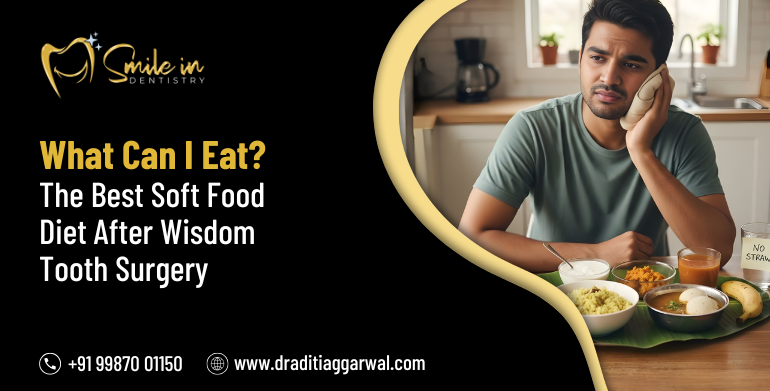
Breaking News: Wisdom Tooth Is Gone. Hunger Has Questions.
Your wisdom tooth has been removed, the surgery went well, and now you’re back home. The numbness is slowly fading, your jaw feels a little stiff, and suddenly a much bigger concern takes over your mind:
“What am I supposed to eat now?”
If you’ve recently gone through wisdom tooth removal in Kandivali, this question isn’t silly, it’s practical. Food is comfort, routine, and energy, especially in Indian homes. And when chewing feels risky, every meal becomes a decision.
At Smile In Dentistry, we hear this question every single day. Not just once, but repeatedly. So instead of giving you a rushed list, we’re breaking it down calmly, logically, and in a way that actually fits Indian eating habits.
Main Update: Why Eating Right After Surgery Actually Matters
After wisdom tooth surgery, your mouth is healing from the inside. There’s a small wound where the tooth used to be, and a blood clot forms there to protect the area. This clot is important, it’s like a natural bandage.
Now here’s the thing most people don’t realise:
The wrong food doesn’t just hurt, it can disturb healing.
Hard, spicy, or hot foods can:
1. Delay healing.
2. Increase pain.
3. Cause bleeding.
4. Lead to dry socket (which is extremely uncomfortable).
That’s why food after surgery isn’t about taste, it’s about timing.
Official Eating Rules After Wisdom Tooth Surgery
Based on what we routinely advise after wisdom tooth removal in Kandivali, here are the basics you should keep in mind:
1. Eat foods that don’t require chewing.
2. Avoid heat, spice, and crunch.
3. Don’t eat from the surgery side.
4. Skip straws completely.
5. Eat slowly, even if you’re hungry.
These rules aren’t restrictions. They’re temporary helpers.
Day-by-Day Food Guide After Wisdom Tooth Surgery
Day 1: Ultra-Soft, Zero Chewing
This is the day your mouth needs the most rest.
Best food options:
1. Plain curd or yogurt.
2. Mashed banana.
3. Applesauce (mashed apples).
4. Dal ka paani (strained, mild).
5. Coconut water.
6. Milk (room temperature or cool).
Pro Tip: If hunger hits hard, don’t ignore it. Small, frequent meals work better than one big plate.
Day 2–3: Soft, Comforting, Still Gentle
Swelling may still be present, but you’ll feel slightly more normal.
Safe options now include:
1. Soft khichdi (no tadka, no spice).
2. Well-cooked rice with plain dal.
3. Oats porridge.
4. Soft idlis without chutney.
5. Paneer mashed lightly.
Indian comfort food actually works really well here, as long as it’s soft.
Day 4–5: Slowly Expanding the Menu
At this stage, discomfort is reduced, but healing isn’t complete.
You can try:
1. Soft rotis soaked in dal.
2. Vegetable soups.
3. Scrambled eggs.
4. Soft pasta without spice.
5. Upma with extra softness.
6. Chew slowly and only on the opposite side of the surgery.
Day 6–7: Controlled Return to Normal Food
You’ll feel tempted to eat everything again. This is where patience matters.
You may add:
1. Soft cooked vegetables.
2. Normal rice meals (mild).
3. Crunchy, spicy, or hard foods still need to wait.
Foods You Should Strictly Avoid (Even If You Feel Fine)
These foods are common reasons people return with post-surgery discomfort:
1. Chips, farsan, biscuits.
2. Nuts, seeds, popcorn.
3. Hard fruits like apple or guava.
4. Sticky sweets.
5. Alcohol and smoking.
After wisdom tooth removal, many problems don’t come from surgery, they come from rushing food choices.
Hot vs Cold Foods: What Actually Helps Healing
1. Cold foods help reduce swelling.
2. Hot foods increase blood flow and can restart bleeding.
For the first few days:
1. Choose cool or room-temperature food.
2. Avoid piping hot tea, coffee, or soup.
3. Once healing improves, warm food is fine.
Why Chewing Feels Awkward (And Why That’s Normal)
Jaw stiffness, limited mouth opening, and mild soreness are normal after surgery. The jaw muscles were stretched during the procedure.
What helps:
1. Taking smaller bites.
2. Eating slowly.
3. Avoiding wide mouth opening.
4. This improves gradually. No special exercise needed unless advised.
Drinking After Surgery: Small Sips Matter
Hydration supports healing, but how you drink matters.
1. Sip water gently.
2. Avoid straws completely.
3. Skip fizzy drinks.
4. Coconut water is a great choice.
Straws create suction, which can disturb the healing clot.
Common Food Myths After Wisdom Tooth Surgery
“If pain is gone, I can eat anything.”
Not true. Healing continues even after pain reduces.
“Soft food means boring food.”
Also not true. Texture matters more than taste.
“Skipping meals helps healing.”
No. Your body needs nutrition to repair tissue.
Eat Smart, Heal Faster
Wisdom tooth surgery may be short, but recovery depends on daily habits, especially food. Soft foods protect the healing area, reduce discomfort, and prevent complications like dry socket.
As healing progresses, Indian comfort foods like khichdi, dal, soft rice, and paneer fit perfectly into recovery without stressing the jaw.
Hydration, slow eating, and patience matter just as much as the surgery itself.
FAQs
How long should I follow a soft food diet after wisdom tooth removal?
Most people need soft foods for about 5–7 days. Even if pain reduces earlier, the socket still needs time to heal internally.
Is reduced appetite normal after surgery?
Yes. Swelling and discomfort can temporarily reduce hunger.
When can I eat completely normal food again?
Most people return to normal eating after 7–10 days.
A Warm Note from Smile In Dentistry
If you’re planning or recovering from wisdom tooth removal in Kandivali, remember, recovery doesn’t end when the surgery does. Food choices, patience, and small daily habits shape how smoothly healing happens.
At Smile In Dentistry, we guide you not just through the procedure, but through recovery too. If something feels uncomfortable or confusing, we’re always happy to help.
Healing works best when it’s calm, informed, and comfortable.